About a month into manually tracking my surf sessions I made two surprising discoveries that changed the way I approach surfing. In this quick post I’ll explain both the obvious and hidden benefits that tracking have brought me in my quest for stoke.
Why I Started Tracking
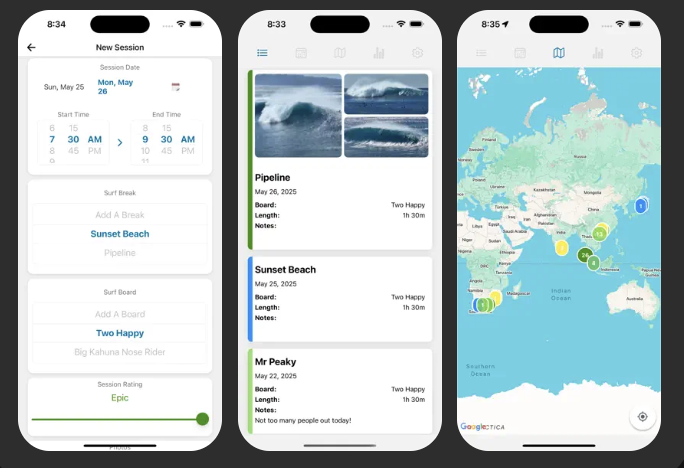
I started logging each session with the intent of understanding the nuances of the breaks I was surfing. I wanted to know what breaks worked based on the incoming swell size and direction. I was unorganized but consistent, writing down each session on one line of my notebook. I mainly wrote down the surf break name, time of session, swell size and direction, and how good it was; sometimes I would add in things like who I surfed with, what the crowds were like, or an unusual event like seeing a pod of dolphins.
It worked fairly well for its intended purpose. It surprised me with several unintended benefits.
Surprise Findings
Improved Attention Allocation
The act of tracking itself forced me to pay closer attention to what I was doing which benefited my surf forecasting. It’s simple and obvious and works… but despite having heard at least a dozen “high performers” mention it across multiple productivity podcasts, I hadn’t really tested it yet.
I had heard locals around my area talk about the swells in a language that seemed foreign. I knew the basics from reading surf forecasts – swell size, direction, tides, and winds. But the local legends I occasionally talked to described the conditions with a much deeper level of understanding. They were queued in to the swell angle, period, local weather patterns, and seasonal trends. I was going off green bar or yellow bar from the free report.
A big south swell would roll in and I’d get excited, making arrangements with friends for what I expected to be a stoke-filled session the next day. Then I’d feel gutted, checking it from the lookout to see every wave walling up and closing out. “There isn’t enough West in the water” – a side comment from another surfer rang in my ears on one of these depressing mornings. I didn’t know what it meant and it frustrated me even more.
After a particularly hard let down from a run of good swell but mostly bad surf, I cracked. I was tired of setting false expectations because I didn’t know how to match the swell forecast to my local breaks. Something had to change. I heeded the advice of the success gurus and started tracking my surf sessions.
I was surprised at how quickly my forecasting improved. It wasn’t that I was connecting the dots between my ‘epic’ sessions and bad ones – I’d need a much larger data set than just a handful of sessions logged before those insights arose. My improvement came instead from a shift in focus.
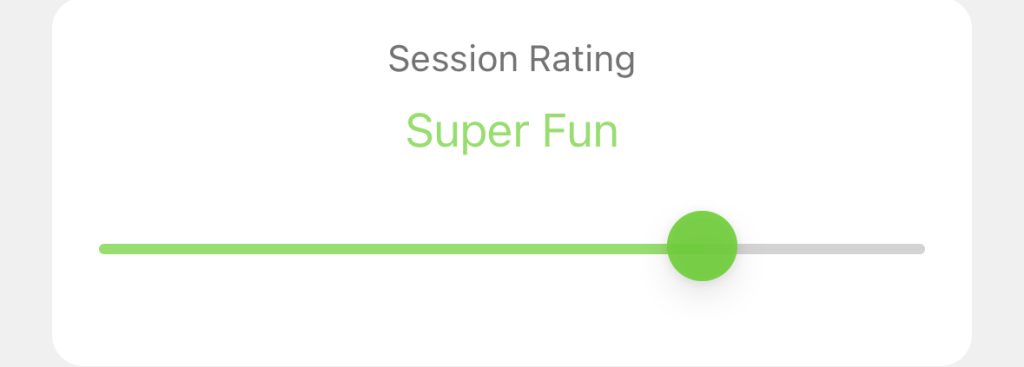
Writing down the details of each session forced me to think about my decisions. I’d log a session as ‘super fun’ but be surprised when I noted the swell size and angle. It turned out that at my local breaks small secondary swells were much more important than I’d previously expected.
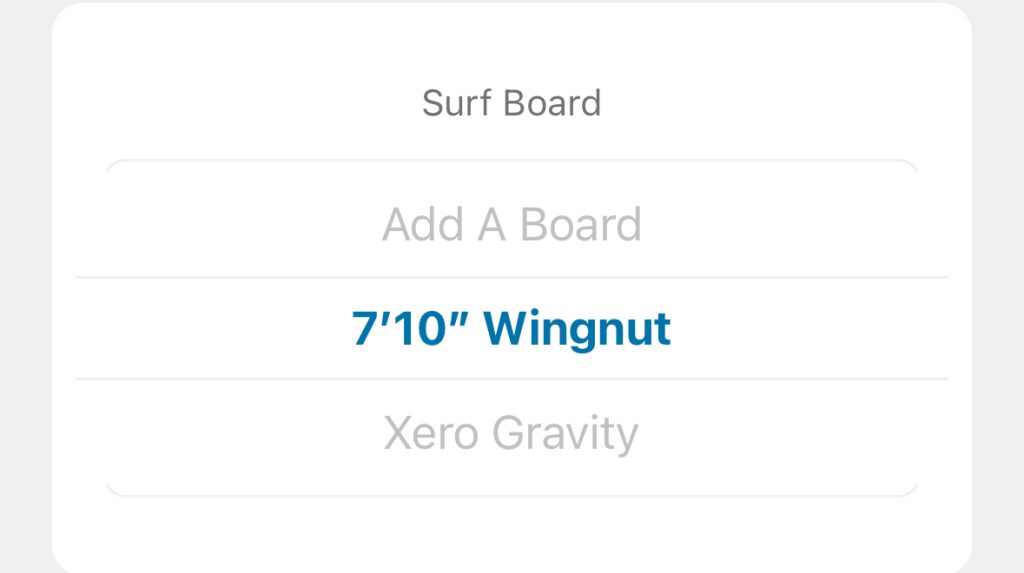
I also realized the value of matching my board to the wave and started paying closer attention to board selection. Incidentally, as I continued tracking I ended up learning a lot about my own surf style. Despite what I thought was true, I actually found more stoke on bigger boards instead of the ‘cooler’ and more ubiquitous high performance shortboard – the tracking didn’t lie.
That was just the start…
Unexpected Moments of Stoke
My first not-so-obvious insight was that my ‘stoke’ after each session was influenced much less by wave quality than I had expected. Of course I was super stoked on the days with perfect peaks, but those were rare occurrences and my notes were still full of ‘super fun’ sessions in average surf. What was going on?
This is where the unstructured aspect of my notes was key. Looking back through my best sessions I found that many of them had okay conditions for surf but scribbled in the margins I had noted other experiences that kicked up the stoke level. A nice sunrise, dolphin sighting, or chat with a fellow surfer increased my stoke. A session with a close friend magnified it.
I had expected there to be a clear connection between the quality of the waves and my stoke level, but it wasn’t that simple. While a great wave is sure to draw a stoke, there are a host of other delights to be discovered just by paddling out.
The Lasting Value
After I learned the nuances of my local breaks and was predicting swells much better I could have stopped tracking my sessions. I improved my board selection, placed more weight on getting a friend or two to join me, and did my best to admire nature during the lulls. But my final insight is what has kept me tracking despite already internalizing its main lessons.
Looking back through my pages of notes I’m continually surprised at how much I surf. If in March you asked me how much I’d surfed or how stoked I’d been in February, I’d likely be off by 40% or more. I simply don’t have the memory to recall every session. I can barely tell you what I had for lunch more than 24hrs after scarfing it. Like most people, I only remember the extraordinary events… and sometimes even those fall out over time.
Since I place so much weight on surfing, I generally gauge my happiness on how often I get out and how good my sessions are. If you catch me in a week of flat surf, my outlook on life is much dimmer than a week of peaky nugs. This is the simple reality of the human condition.
My notebook, however, is a source of truth. If I logged it I can be confident it happened. Flipping back through the pages I’m always surprised at the number of ‘fun’ or ‘super fun’ sessions I had that have dropped from my memory. But that extra note in the margins, like who I surfed with or the one standout wave I had, is enough to jar the memory and bring a piece of it back.
I get a short hit of stoke from recalling these fun sessions. But what’s more valuable is the sense of fulfillment I have when I see a series of dates with consistent sessions and decent stoke ratings. Despite whatever family drama or work disaster is at hand, I can look back and know I’ve done something good with my time here on earth. For me, a life well lived is one with frequent sessions and a regular reminder that I’m on track goes a long way.